
United Kingdom, Oct 26, 2026
By Frank Rubotham, Head of Cisco Alliance and Propositions at Logicalis UKI.
How resilient connectivity can support critical operations, unlock new technologies and deliver better event experiences
Sporting venues are becoming increasingly technology-dependent environments. Whether it is a football stadium, racecourse, tennis venue or golf tournament, organisers now rely on an expanding range of connected systems to keep events running smoothly, securely and efficiently.
On event days, thousands of fans arrive alongside security personnel, kiosk staff, stewards, medical teams, broadcasters and AV crews. Ticketing systems, payment terminals, cameras, staff communications and other operational technologies all need reliable connectivity, often across large or densely populated environments.
Connectivity is therefore becoming much more than a way of improving the digital experience available to spectators. It is increasingly part of the operational infrastructure on which sporting venues depend.
Fan expectations are changing too. Research published by Deloitte found that more modern fans expect in-person events to offer the same digital richness they get at home, with over half of respondents wishing they had better access to instant replays, live commentary and real-time analytics during a game.
Similarly, research by Designit following the FIFA World Cup 2026 highlights opportunities for sporting venues to create more personalised and connected experiences; however, fan experience is only one part of the equation. Behind the scenes, sporting venues need networks capable of supporting increasingly complex operations without compromising performance. Whether a venue hosts one type of sport or multiple event formats, reliable connectivity is becoming fundamental to how effectively it operates.
The problem with traditional connectivity
Historically, connectivity has often been treated as a supporting component of venue infrastructure rather than critical operational infrastructure in its own right.
While standard Wi-Fi and public mobile networks are reliable enough for many everyday applications, they can struggle in large sporting environments due to bandwidth demands, radio interference, geographic coverage requirements and heavy-duty building materials that can affect signal travel.
For venue operators, the bigger concern is ensuring their most important systems continue to function when demand is at its highest.
If connectivity supporting core event functions fails, ticketing gates, merchandise and hospitality payments, security systems or staff communications can be disrupted. These are not simply inconveniences for spectators; continued disruption can compromise safety, affect operational efficiency and result in significant financial losses.
The challenge only grows as venues introduce more technology. Every additional connected camera, payment terminal or communications device creates another dependency that needs to be managed.
The pivot to P5G
With many venues moving towards cashless payments, paperless ticketing and increasingly connected operations, resilient networks have become an operational necessity. As a result, private 5G (P5G) is emerging as an important infrastructure option.
Unlike relying solely on public mobile connectivity, P5G enables an organisation to establish a dedicated network for its own operational requirements. This gives operators greater control over network performance and allows critical applications and devices to be prioritised according to business need.
Already popular across sectors such as manufacturing, transport, logistics and healthcare, P5G capabilities have delivered documented improvements in network coverage and performance.
Importantly, P5G is not simply another connectivity service being offered directly to spectators. Its value lies in giving operators a resilient, controllable network for the technologies required to run their venue.
That could include security, staff communications, ticketing, payments and other connected systems. Fans ultimately benefit because these services work more reliably, but the immediate business case is enabling the organisation behind the event to operate efficiently and confidently.
As more event technologies are added, this resilience becomes increasingly important. More devices and systems create greater complexity and more opportunities for operational failure, making the network supporting them a critical part of running large-scale sporting events safely and seamlessly.
Scaling P5G capabilities
To scale P5G capabilities, sporting venues should start by identifying their mission-critical workflows and assessing where a dedicated network can deliver the greatest impact.
This includes high-stakes areas such as ticketing, security and communications, where even a few moments of downtime can create immediate risk. Starting here also allows venue operators and network partners to stress-test performance against third-party integrations, broadcasting hardware and security systems in a controlled environment.
From there, P5G can gradually be phased into areas such as digital signage, interactive displays and other smart venue technologies. This approach allows connectivity to scale alongside operational requirements rather than demanding a single large-scale change.
Crucially, there is no one-size-fits-all model. The connectivity requirements of a football stadium will differ from those of a racecourse, tennis venue or golf tournament. P5G deployments therefore need to be designed around the operational needs of each environment.
Connectivity as a long-term asset
For sporting venues, reliable connectivity is becoming an increasingly important part of delivering safe, efficient and commercially successful events.
For some, that will include supporting different event formats. For others, the priority will simply be making the sporting events they already host more resilient and efficient. In either case, connectivity and physical infrastructure increasingly need to be considered together.
P5G's biggest opportunity is behind the scenes: giving operators confidence that the systems their venues depend upon will perform reliably under pressure.
When ticketing, payments, security, communications and other technologies work as intended, fans benefit too. The result is a venue that can operate more efficiently, adopt new technologies with greater confidence and ultimately deliver the seamless experience spectators increasingly expect.
Related Insights

Ireland , Jul 15, 2026
Logicalis launches Ireland's first enterprise Private 5G service to accelerate AI, automation and digital transformation
Logicalis, the leading global technology service provider, today announces the launch of its Private 5G service in Ireland, following an €8 million investment. The company becomes the first digital infrastructure specialist in the Irish market ready to design, deploy and manage Private 5G networks for enterprise customers at scale.

United Kingdom , Jun 30, 2026
Press Release
Logicalis achieves Microsoft Frontier Partner status to achieve Enterprise AI adoption
Logicalis has achieved Microsoft Frontier Partner status alongside its Microsoft Copilot specialisation, reinforcing its position as a trusted partner for organisations looking to scale AI securely, responsibly and with measurable business impact.
United Kingdom , Jun 16, 2026
Penetration testing isn’t the end goal. Proactively reducing exposure is.
Read how modern CISOs are shifting penetration testing from a one‑off audit exercise to a continuous, risk‑driven vulnerability management process that ensures issues are prioritised, fixed, and proven closed.
United Kingdom , Jun 16, 2026
Penetration testing in 2026: 10 shifts security leaders need to know
Read why penetration testing is evolving from a periodic, report-led exercise into a continuous, platform-driven capability that provides real-time visibility, risk-based prioritisation, and ongoing remediation to reduce cyber exposure.

United Kingdom , Jun 2, 2026
Press Release
Cyera & Logicalis UK&I: Helping organisations take control of data risk in the AI era
New partnership aims to give organisations greater visibility, control and protection over sensitive data wherever it resides, across on-prem, cloud, SaaS and AI-enabled environments.

Ireland , Apr 2, 2026
Press Release
9 out of 10 global CIOs admit to “learning on the go” when it comes to AI
New research that finds almost nine out of ten (89%) CIOs are ‘learning on the go’ when it comes to AI. The pace of AI adoption outstripping organisational readiness, and global CIOs are concerned about an “AI bubble”, citing this as a risk for their organisation.

United Kingdom , Mar 31, 2026
Press Release
AI adoption is creating cybersecurity blind spots as UK CIOs warn of lost visibility and control
As AI adoption accelerates across enterprise environments, new research from global technology service provider, Logicalis, suggests that it is introducing complex cybersecurity challenges that many organisations are still struggling to manage effectively.

Ireland , Mar 16, 2026
Press Release
Logicalis Ireland named one of only two Cisco Preferred Partners across all Architectures
The designation sits at the highest level of recognition within Cisco's newly launched Cisco 360 Partner Program, a next-generation framework designed to identify partners with the deepest technical expertise, proven lifecycle delivery capabilities, and measurable customer impact across the full Cisco portfolio.

United Kingdom , Mar 3, 2026
Press Release
The appetite for AI adoption is high, but CIOs across the UK&I are worried the pace is too fast
It is clear from the results that AI is no longer emerging at the edges of the organisation; however, over a third of UK CIOs (36%) believe the pace of AI adoption within their organisations is "too fast," rising to 51% of CIOs globally.

United Kingdom , Feb 20, 2026
Logicalis joins Neutral Wireless at Mobile World Congress 2026: Showcasing the Power of Private 5G
Logicalis will be at MWC Barcelona 2026, jointly sponsoring Neutral Wireless’ presence at the event and demonstrating how Private 5G (P5G) is moving from concept to operational reality across some of the most demanding environments.
United Kingdom , Feb 11, 2026
Press Release
Logicalis achieves Cisco Preferred Partner status across all architectures
Logicalis UK&I is proud to announce its recognition as a Cisco Preferred Partner across all five Cisco technology architectures - Networking, Security, Collaboration, Services, and Cloud & AI Infrastructure - under the newly launched Cisco 360 Partner Program.

United Kingdom , Jan 6, 2026
Press Release
Logicalis named as supplier on CCS's new Technology Services 4 framework
Logicalis UK&I, a leading global technology services provider and trusted partner to the UK public sector, is excited to announce being named as a supplier on Crown Commercial Service's (CCS) RM6190 Technology Services 4 Framework.

United Kingdom , Oct 29, 2025
Press Release
Logicalis named as supplier on NHS Shared Business Services Digital Workplace Solutions 2 Framework
Logicalis UK&I has been named a supplier on the NHS Shared Business Services Digital Workplace Solutions 2 Framework, enhancing its role in supporting NHS Trusts and public sector organisations with digital transformation.

United Kingdom , Oct 28, 2025
Press Release
Logicalis achieves major sustainability milestones and expands global community impact
Logicalis has announced significant progress in its FY25 Responsible Business Report, demonstrating measurable impact through strategic environmental, social, and community initiatives.

United Kingdom , Oct 16, 2025
The wireless wake-up call for CIOs
Research reveals that CIOs in the UK, Ireland, and Channel Islands lag behind global peers in adopting IoT and Private 5G technologies despite budget allocations for these investments. Addressing barriers like budget, compliance, and skills is crucial for closing this gap and unlocking competitive advantages.

United Kingdom , Jul 9, 2025
Press Release
Logicalis recognised as NetApp Public Sector Partner of the Year
Logicalis, a leading global technology service provider, has been recognised as Public Sector Partner of the Year at the prestigious 2025 UKI NetApp Partner Awards.

Ireland , Jun 26, 2025
Press Release
Logicalis sets foundation for John Paul Construction's international future with AI services
Logicalis UK&I, a global technology service provider, today announces that it has set the foundation for John Paul Construction’s international future with AI services.

United Kingdom , Jun 26, 2025
Press Release
Logicalis reaches carbon-neutral milestone on its journey to Net Zero
Logicalis, the leading global technology service provider, today announces it has achieved its 2025 target for carbon neutrality in Scope 1 and 2 emissions - marking a significant milestone in the company’s journey to reach its SBTi-validated goals.

United Kingdom , Jun 5, 2025
Private 5G for Port Automation
Port infrastructure across Britain urgently requires enhanced connectivity to support the full automation of complex, end-to-end operations. These processes are time-critical, demanding real-time precision from stakeholders. Yet, with sensitive data in play and serious risks linked to errors, upgrading legacy systems is no small task.
United Kingdom , May 27, 2025
Press Release
Logicalis becomes first Cisco XDR CPS Specialisation Partner to offer global Cisco MXDR
Logicalis, the leading global technology service provider, today announces it has achieved the Cisco Extended Detection Response (XDR) Cisco Powered Services (CPS) Solution Specialisation and becomes a Cisco XDR CPS Specialisation Partner.

United Kingdom , Apr 10, 2025
From bottlenecks to breakthroughs: How Private 5G is transforming port operations
Unlike Public 5G, Private 5G gives businesses full control over their networks, allowing them to customise their connectivity for mission-critical applications, while tightening any necessary security measures.
United Kingdom , Mar 24, 2025
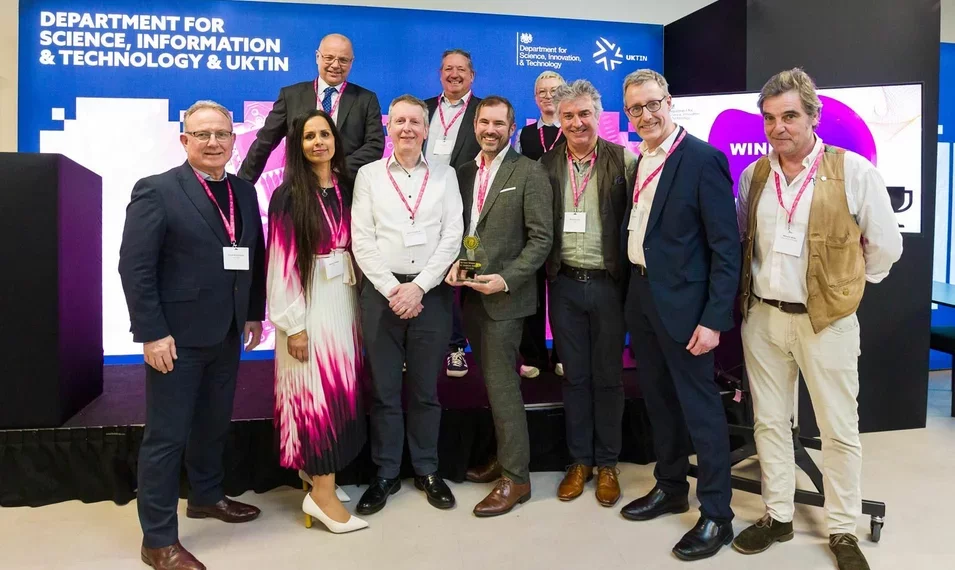
Proud to announce: Logicalis wins the 5G Ecosystem System Excellence Award!
Logicalis is delighted to be recognised as part of the winning team for the prestigious 5G Ecosystem System Excellence Award through the Department for Science, Innovation and Technology for Science Innovation DSIT Future Networks Programme.
United Kingdom , Mar 11, 2025
Logicalis 2025 CIO Report: CIOs under pressure to deliver a return on innovation
17 March 2025. Logicalis, the leading global technology service provider, has released its annual CIO Report, which reveals that 95% of organisations are actively investing in technology to create new revenue streams within the next 12 months.

United Kingdom , Feb 26, 2025
Blog
Behind the delegate pass of Cisco Live 2025
Let me take you behind the scenes of what was an incredible week at Cisco Live Amsterdam 2025. As someone who was there on the ground, I wanted to share the innovations that got everyone talking – and more importantly, what they mean for your business.
United Kingdom , Dec 4, 2024
Microsoft Ignite 2024: Copilot innovation and advancements in security
The major announcements highlighted this year focused on Copilot and Security. While this may not come as a surprise, everyone should be excited about what these advancements mean for the upcoming year.

United Kingdom , Oct 29, 2024
Press Release
Logicalis recognised as Global Sustainability Partner of the Year, for the second consecutive year at Cisco Partner Summit 2024
Logicalis receives the global accolade, in recognition of its leadership and performance in sustainable practices for the second year running
United Kingdom , Oct 14, 2024
Press Release
Logicalis launch Sustainable IT solutions blueprint to accelerate their customers journey to net zero
Logicalis announced the launch of its comprehensive Sustainable IT solutions blueprint, designed to propel organisations towards a more environmentally conscious and carbon efficient IT infrastructure.

United Kingdom , Sep 17, 2024
Press Release
Logicalis announce new partnership with Extreme Networks in UK & Ireland
London, 17th September 2024 - Logicalis UK & Ireland, a leading IT solutions and managed service provider, today announced a new partnership with Extreme Networks, a leader in cloud networking, in efforts to deliver cutting-edge networking solutions to businesses across the UK and Ireland.

United Kingdom , Jul 31, 2024
Blog
How can C-level leaders unlock enterprise value through Sustainability?
Read how CEOs and other top executives can champion sustainable practices, to inspire the entire company to prioritise responsibility and innovation. Join our LinkedIn live - Increasing Enterprise Value through Sustainability - on Wednesday 11th September 2024.
United Kingdom , Jul 1, 2024
Press Release
Logicalis 2024 CIO Report: Sustainability a top focus for tech investment
Discover how tech leaders are prioritising sustainability and investing in initiatives and technologies to achieve environmental objectives. Find out why IT plays a crucial role in achieving sustainability goals.
Ireland , May 24, 2024
Press Release
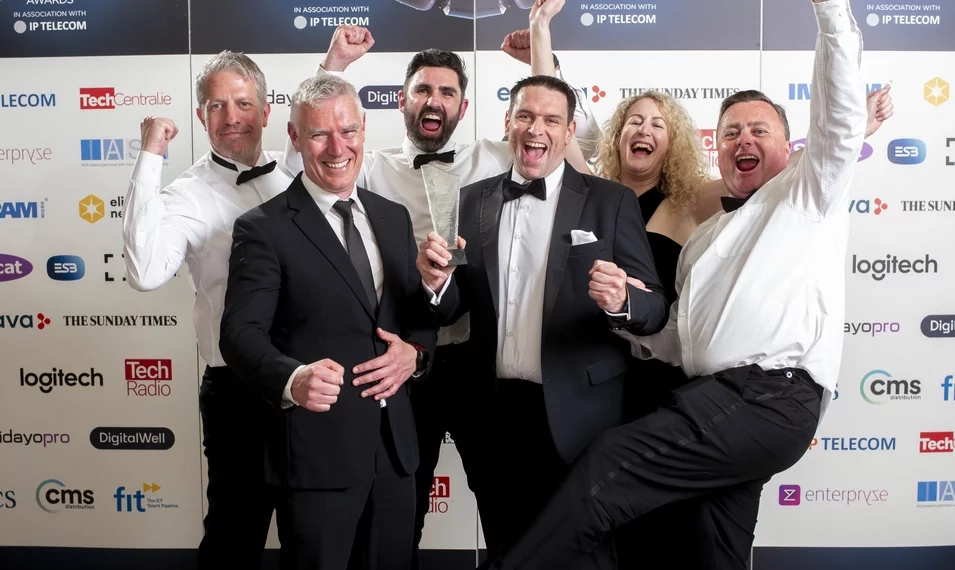
Logicalis’ Gareth Grimshaw named IT Architect of the Year at the 2024 Tech Excellence Awards
Dublin, 24th May 2024 – Logicalis UK & Ireland (UK&I), the IT solutions and managed service provider, today announces that its Senior Azure Architect Gareth Grimshaw was named IT Architect of the Year at the 2024 Tech Excellence Awards.

United Kingdom , Apr 17, 2024
Press Release
Logicalis net-zero emissions targets approved by Science Based Targets initiative (SBTi)
Logicalis joins the global movement towards corporate net-zero with validated and approved science-based targets, aligning with the Paris Agreement goals.
United Kingdom , Jan 17, 2024
Latest EOX Announcements from Cisco
EOX is a critical milestone when looking at the lifecycle of your Cisco environment. Logicalis have compiled the latest Cisco announcements into an easy-to-navigate report that allows you to obtain end-of-life information including the latest End of Sale announcements and all products which are going End of Life, End of Attach and End of Security Vulnerability.
United Kingdom , Nov 13, 2023
Logicalis named inaugural 2023 Cisco Global Sustainability Partner of the Year
Last week, we were honoured to receive the inaugural 2023 Cisco Global Sustainability Partner of the Year award during Cisco's Global Partner Summit event in Miami. This prestigious accolade acknowledges Logicalis' exceptional sustainability achievements and success in helping customers reduce the environmental impact of their digital ecosystems across the globe.

United Kingdom , Sep 22, 2023
Cisco Prime Reaches End of Life (EOL): What's Next?
In the world of networking, Cisco Prime Infrastructure has been an essential tool for many professionals. On March 31 2023, Cisco announced the End of Life (EOL) for Cisco Prime. Now is the time to start your migration to ensure a seamless transition to the new platform.
United Kingdom , Aug 10, 2023
Logicalis named as NetApp Prestige Partner
As a global technology service provider, Logicalis UKI has been recognised with NetApp Prestige Partner status under the new partner programme, NetApp Partner Sphere. This achievement recognises sustained excellence in the design and delivery of NetApp technologies, and further strengthens our position as a leading provider of NetApp solutions and services.
United Kingdom , Jun 21, 2023
Logicalis UK&I Named FlexPod Partner of the Year during NetApp UK&I Partner Awards, London, May 2023
Logicalis UKI is proud to announce it has been awarded the 2023 NetApp UK&I Partner Award for FlexPod Partner of the Year. In front of 150 industry peers this distinguished partner industry recognition was presented during an Awards Dinner at ‘Frameless’, Marble Arch, London.

United Kingdom , Jun 21, 2023
Logicalis WINS at the UK Storage Awards 2023!
Alex Louth, Managing Director, Logicalis UK&I, won the ‘Contribution to Industry’ award and Logicalis UK&I were named ‘Corporate Reseller of the Year’ at the UK Storage Awards 2023. At the awards ceremony held in London on June 8th, an audience of over 350 industry professionals was present to witness the announcement as Logicalis was revealed as a multiple award winner.

United Kingdom , May 30, 2023
Logicalis WINS at the UK Network Computing Awards 2023!
Logicalis is delighted to announce that we have been awarded ‘UK Network Project of the Year’ in collaboration with Birmingham City University at the UK Network Computing Awards, May 2023.
United Kingdom , Feb 22, 2023
Logicalis Named As One of the Best Workplaces in Ireland
Logicalis is delighted to announce that it has been officially recognised as one of the Best Workplaces in Ireland in 2023. Logicalis was recognised at the annual Great Place to Work Awards on Wednesday 22nd February 2023. This is Logicalis' first year to be named as a top Irish workplace, which is based on direct feedback from employees, provided as part of an extensive and anonymous survey about the workplace experience. This was a notable year for the Best Workplaces Awards, as it is the first time that 100 companies were recognised.

United Kingdom , Feb 15, 2023
Bold leadership elevates CIOs to the boardroom, according to Logicalis global study
CIOs have stepped into the role of digital evangelist and strategic advisor, according to the 2023 Global CIO Survey from Logicalis, a global technology service provider. The study questioned 1000 technology leaders and explores how the role of the CIO is evolving. This year’s survey, The Meteoric Rise of the CIO, demonstrates a monumental shift in the role of the CIO from tech implementor to business leader.
United Kingdom , Feb 14, 2023
Press Release
Logicalis UKI is officially one of UK’s Best Workplaces for Wellbeing!
London, 14th February 2023 – Logicalis UKI has officially been named one of the UK’s Best Workplaces™ for Wellbeing (2023) by Great Place to Work®, the global authority on workplace culture.
United Kingdom , Dec 19, 2022
Press Release
Logicalis commits to Corporate Net Zero Standard (SBTi), marking another milestone in its sustainability journey
London, United Kingdom – 19 December 2022: Logicalis, a global technology service provider, today announces its commitment to the Science Based Targets initiative (SBTi) Corporate Net Zero Standard - the world's first framework for corporate net zero target setting in line with climate science.

United Kingdom , Nov 17, 2022
Navigating the world of Microsoft Licencing
Insights into what licencing options are available and what might be the option to consider for your organisation based on some recent announcements by Microsoft.
United Kingdom , Nov 16, 2022
Logicalis achieves the Cisco Powered validated service for Secure Access Service Edge (SASE) and SD-WAN status
This status means Logicalis is the only global gold partner who can deliver a managed SASE service to customers anywhere in the world!
United Kingdom , Nov 16, 2022
Announcing End of General Support for VMware vSphere 6.5 and vSphere 6.7
Upgrade today to maintain support and subscription services Article by Gareth Headley, VCIX – DCV, vExpert, VMware Infrastructure Specialist at Q Associates, a Logicalis company.

United Kingdom , Nov 8, 2022
Maximise your IT budget with exclusive IBM Academic Price Promotions offered by Logicalis
In partnership with IBM, Logicalis is delighted to announce a series of academic price promotions, covering a range of IBM rack servers and storage systems.
United Kingdom , Nov 7, 2022
Logicalis Recognised as Winner of the Cisco Global Enterprise Networking and Meraki Partner of the Year Award at Cisco Partner Summit 2022
Logicalis UKI is proud to announce it has been recognised as the Global Enterprise Networking and Meraki Partner of the Year at Cisco’s annual Partner Summit. As one of only six Cisco Global Gold Certified Partners, Logicalis is honoured to receive this award for demonstrating innovation, driving engagement, and delivering greater value for its customers and communities.
United Kingdom , Nov 3, 2022
Logicalis UK&I commits to being carbon-neutral by 2025 as part of Techies Go Green movement

United Kingdom , Oct 24, 2022
Discover what was unveiled at Microsoft Ignite 2022
Top Announcements in Microsoft Hybrid Cloud and Security.
United Kingdom , Sep 28, 2022
Logicalis UK&I officially named a 2022 UK’s Best Workplace™ in Tech
Logicalis UK&I, an IT solutions and managed service provider, today announces it has been recognised as one of the UK's Best Workplaces™ in Tech, 2022. The list was launched this morning by Great Place to Work® UK, ranking Logicalis UK&I 59 out of 67 medium-sized organisations.
United Kingdom , Sep 22, 2022
Logicalis UK named supplier on G-Cloud 13 Framework
Logicalis UK, an international IT solutions and managed services provider, has been listed as a supplier on the G-Cloud 13 Cloud Services and Solutions Framework.

United Kingdom , Aug 8, 2022
Logicalis Acquires Q Associates to extend specialist Microsoft and data-centric IT services capabilities across their UK&I operation
Logicalis, an international IT solutions and managed services provider, today announced it has acquired Q Associates, one of the UK's leading providers of IT consultancy and advisory services around data management, data protection, compliance and information security.

United Kingdom , Jul 20, 2022
Logicalis UK&I officially named a 2022 UK’s Best Workplaces™ for Women
Logicalis UK&I, an IT solutions and managed service provider, today announces it has been recognised as one of the 2022 UK's Best Workplaces™ for Women. The list was launched this morning by Great Place to Work® UK, ranking Logicalis UK&I 85th out of 96 UK-ranked medium-sized organisations.

United Kingdom , Jun 28, 2022
Is IT complexity a significant factor in managing IT risk?
My emerging view of the key IT issue businesses are focusing on in 2022, is IT risk. It may be dressed up as something different, but fundamentally it is risk. This is caused by:

United Kingdom , Jun 24, 2022
To be in cloud, or not to be in cloud, is that the question?
Thanks to William Shakespeare for lending us his eternal question to adapt. Unfortunately, when it comes to cloud the answer isn’t quite as binary - so let’s discuss this in a bit more detail over the next few minutes.

United Kingdom , Jun 16, 2022
Do CIOs hold the key to unlocking sustainable innovation?
Business leaders are overwhelmed. According to Verizon, 66% of leaders suffered from burnout last year. This unfortunately is not surprising. Many leaders are constantly adapting to evolving customer expectations, the pressure to compete in the digital economy, and the variety of protracted risks facing their organisations. Leaders are learning how to empower digital-first organisations and consider the above factors to ensure the business can thrive. These factors are also fuelling the pressure to continuously innovate to stay ahead of the curve, and their competitors.

United Kingdom , Jun 15, 2022
The Digital Health Service – Full Stack Observability
Many people nowadays have preventative health checks. Increasingly, we screen whole cohorts for disease that, if treated early, reduces the overall impact – breast and bowel cancer being the most well-known. This not only improves the chance of making a full recovery, but also requires less visits to the doctors. Our nations also invest heavily in healthcare for the unwell, but increasingly invest in public health to prevent us getting unwell - the COVID test and vaccination programme being a leading example. So, should we also be making regular health checks on our business?
, May 26, 2022
Logicalis wins Managed Security Service Provider of the Year at the Tech Excellence Awards 2022
Dublin, 26th May 2022 – Logicalis, the IT solutions and managed service provider, today announces that it has won the award for Managed Security Service Provider of the Year at the Tech Excellence Awards 2022, which took place at the Royal Marine Hotel in Dublin on the 25th of May.
, May 18, 2022
Securing Access for Hybrid Workers
A lot of us have ended up as hybrid workers, spending some of the working week in the office and the rest of our time split between working from home, a third party’s office or on-the-go. Each day, regardless of where we are, we connect to corporate services to do our jobs. Some of those services will be hosted in data centres, some in clouds and the rest via the internet.
, May 4, 2022
Redefining work with a Digital HQ
The word ‘work’ has long been synonymous with a location – you ‘go to work’. Now that we’ve adapted to living through the pandemic, ‘work’ simply defines what we do - the place we do it no longer matters. Moving forwards, the benefits to enabling the workforce to work from anywhere, and the flexibility to work-life balance that it allows, can’t be ignored – indeed many believe it will be paramount to attracting and retaining talent.
, Apr 28, 2022
Logicalis UK & Ireland, officially named one of the UK’s Best Workplaces™!
London, United Kingdom, 28th April 2022 – Logicalis UK & Ireland (UK&I) today announces it has been recognised as one of the 290 UK’s Best Workplaces™ (2022) by Great Place to Work®, the global authority on workplace culture, achieving a ranking of 81 in the medium size category published by Great Place to Work® UK today.
, Apr 25, 2022
Logicalis target digital-first leaders with launch of managed Intelligent Connectivity service
London, United Kingdom – 25th April 2022: Logicalis, a global IT solutions and managed service provider, today announces the launch of Intelligent Connectivity, a solution designed to empower digital-first customers to improve business performance and user experience by operating with connectivity as a managed service.
, Apr 19, 2022
Logicalis reflect on three-year journey of innovation and growth with Microsoft
In the top 1% of Microsoft Azure partners globally as an Azure Expert MSP, Logicalis help clients unlock their true potential through hybrid cloud solutions and managed services. Initially certified as an Azure Expert MSP three years ago, the relationship with Microsoft has deepened through a focus on specialisations, with eleven advanced specialisations attained including all Security specialisations currently available. Logicalis have been able to jointly innovate to create industry leading, cutting-edge solutions and services with Microsoft technology embedded at their core.
, Apr 12, 2022
5 Things to consider for your Organisation’s return to the Office
The way we work has been evolving for several years, no longer is a job 9 to 5 and conducted out of an office revolving around the desk you occupy. In the modern world, the expectation is that everything is available 24/7 and as workers we have an expectation that we can do this from anywhere, at any time, securely and performantly.
, Mar 31, 2022
Allow employees to collaborate freely
A vital component of any successful business is enabling employees to collaborate from anywhere. In the new digital workspace with employees split across office and home environments, effective collaboration needs to be seamless across every working space. Employees need to feel that they can communicate with each other at any time, from anywhere. It is not, however, an easy task, and to succeed, businesses must address the tears in the already stretched fabric of collaboration.
, Mar 25, 2022
2021 Global CIO Survey- CIO priorities: Business continuity, resilience, and mitigating risk
The move to remote working during the pandemic tested security teams to the limit as they rushed to support a borderless workforce with makeshift infrastructures. The effects of this rapid change in working environments are still being felt today, with 94% of CIOs concerned about serious security threats over the next 12 months with data breaches (47%), malware and ransomware (39%) and lack of staff awareness (30%) noted as key areas of concern.
, Mar 21, 2022
Only a third of CIOs cite cyber-risk mitigation as a performance measure
While 94% of CIOs acknowledge some form of serious threat over the next 12 months, only 27% list business continuity and resilience as a top-three priority during the next 12 months and barely a third cite risk mitigation as a measure of performance. These findings come from the fourth and concluding section of the 2021 Global CIO Survey from Logicalis, a global provider of IT solutions.
, Mar 18, 2022
Diversity as a key differentiator in transformation
Logicalis, Cisco and Microsoft discuss the impact of diversity and inclusion on business success. As employees leave their organisations in droves in pursuit of a more meaningful existence and the war for talent heats up, leaders must reflect on their current strategies and structures, which may no longer be fit for purpose. Organisations need to transform their vision and leadership strategies to address the talent crisis while enabling an inclusive future for all.
, Mar 17, 2022
A new generation of workers demand a new approach to the workplace
The workplace prior to the pandemic is unrecognisable to what it has become today. The rise of remote working and a younger digitally native workforce, is shaking up traditional business structures. Many organisations are still adapting their workspaces to cope and in some instances need to overhaul their approach to work entirely.

Global , Mar 14, 2022
Logicalis appoints Damian Skendrovic as EMEA CEO
London, 14th March 2022: Logicalis, an international IT solutions and managed service provider, is pleased to announce the appointment of Damian Skendrovic to the role of CEO for the EMEA region, as of 8th March 2022.
, Mar 9, 2022
Actionable insights are the missing link to collaboration in the hybrid workplace
The modern workplace is an increasingly complex environment, and for many is now split between the office and remote work. For businesses to succeed in this new world, they must address some of the common challenges associated with a hybrid workforce and adapt to provide a digital workplace fit for the future.
, Mar 8, 2022
International Women's Day- Leah Shafik
Why do you think International Women’s Day is important? Personally, I think there is still a long way to go for equality and equity for women. Having a day to highlight the achievements of women will ensure that there are positive role models for all generations.
, Mar 8, 2022
International Women's Day- Laura Wright
Why do you think International Women’s Day is important? There are still some life situations (work, culture, religion) where being a woman can be both career and life limiting. International Women’s Day focuses attention on this.
, Mar 8, 2022
International Women's Day- Hannah Pankhurst de Sousa
Why do you think International Women’s Day is important? Celebrating great women and their achievements!
, Mar 8, 2022
International Women's Day- Kate Bentley
Why do you think International Women’s Day is important? It gives the young generation exposure to what roles they can do; you can be whoever you want to be regardless of sex!
, Mar 1, 2022
Digitise Your Business with the Logicalis Intelligent Digital Framework
The pace of change in IT over the past few years has been truly staggering. Cloud based services, the rise of the Internet of Things, software defined technologies and the hugely concerning increase in cyber crime, to name but a few.
, Feb 25, 2022
Why Information Security (IS) Needs Transformational Change
In the modern mobile driven world, security is everyone’s responsibility whereas not too long ago it was considered as mainly an issue for Information Technology (IT) departments – yet people have been misusing data for gain long before the first Chief Information Officer (CIO) was appointed.
United Kingdom , Feb 21, 2022
The Changing Threat Landscape
The range and impact of Information Security (IS) threats has grown and changed continually over the last 40 years or more, along with the motivations and drivers for such attacks. From when the Morris Worm launched the first, apparently inadvertent, distributed denial-of-service (DDoS) attack on the internet, the realm of cybercrime has expanded from hackers often driven by little more than curiosity, to organised crime and state sponsorship.
, Feb 17, 2022
Logicalis UK & Ireland, officially named one of 250 UK’s Best Workplaces™ for Wellbeing
London, United Kingdom: 17th February 2022 – Logicalis UKI today announces it has been named as one of the UK’s Best Workplaces™ for Wellbeing (2022) by Great Place to Work®, the global authority on workplace culture. This announcement builds on the recognition that Logicalis UKI was one of the UK’s Best WorkplacesTM in Tech for 2021 and ranked 61 in the 2021 UK’s Best WorkplacesTM list in the Medium (50-250) category.
, Feb 16, 2022
Why Information Security (IS) Needs Transformational Change
The Threat Landscape has changed. So, what’s next? In the modern mobile driven world, security is everyone’s responsibility whereas not too long ago it was considered as mainly an issue for Information Technology (IT) departments – yet people have been misusing data for gain long before the first Chief Information Officer (CIO) was appointed.
, Feb 7, 2022
Has the pandemic opened up a whole new workforce?
Let me start with an honest reason for why I have written this post. I have no qualification around disability, this post is driven as I qualify as a very proud dad of a 16 year old who has cerebral palsy and is profoundly deaf. I am a dad who wants my son to have the same opportunities as his two brothers, (so I’m the same as all dads really!) and my question is has the pandemic changed the landscape for members of our communities who have disabilities?
, Jan 24, 2022
CIOs spending more time on innovation than ever before
However, despite increased efforts less than a third describe innovation as part of company culture. CIOs are spending more time on innovation, with three quarters stating they have increased innovation efforts, according to the 2021 Global CIO Survey from Logicalis, a global provider of IT solutions. The study, which questions 1,000 CIOs from around the world, finds that despite a strong focus on innovation, just 27% of CIOs describe innovation as part of their company culture.
, Jan 18, 2022
Logicalis UK&I achieves Cisco Advanced Customer Experience Specialization
Logicalis UK&I is excited to announce that we have achieved the Cisco Advanced Customer Experience Specialization, recognizing our excellence in delivering customer support and success. This places Logicalis UK&I amongst just ten companies in the UK to achieve this specialisation.
, Jan 17, 2022
Cisco Price Increase
Last week Cisco announced a price increase on several of its products, below is a summary of this change and how Logicalis can assist.
Global , Jan 11, 2022
Logicalis take the digital workplace ‘beyond productivity’ with the launch of collaboration suite
Logicalis, a global IT solutions and managed service provider, today announces the launch of their digital workplace solution designed to help organisations manage, measure and scale the collaboration experience for the digital workplace.
, Jan 10, 2022
Rethink operational efficiency to unlock resource
A hybrid workplace approach offers many benefits, chief among them the opportunity to unlock potential already held within businesses through operational efficiencies.
, Jan 4, 2022
Rethink the modern workspace to empower employees
The ‘forced experiment’ of the last year and a half has undoubtedly shown that employees are not less productive outside of the office. In fact, many remote workers go above and beyond, reporting higher productivity and thrive when given radical flexibility to focus on consistently delivering desired outcomes in a way that works for them.
, Dec 21, 2021
Hybrid or Multi-Cloud? What’s the difference?
Google either of these terms and you’ll come up with thousands of different answers as to what they are and what their differences are. I think it’s time to simplify the basics of our ever-expanding technology lexicon, so let’s define what these should mean and why.
, Dec 20, 2021
Rethink security for adaptability
Security is one of the biggest challenges that any organisation can face. As businesses look to adopt a hybrid approach, the lack of a clearly definable network perimeter has undoubtedly increased the risk of threat and attack substantially.
, Dec 17, 2021
Network Modernisation – a Corporate Board issue?
In the past you did not need to ask this question. The old network was unsupported, and the capacity was constraining the business. There were different questions of course; which vendor? where is capacity needed? Layer 2 or Layer 3? and wide area connectivity? In the last year this has changed.
, Dec 16, 2021
Predictions for 2022
We are awash with predictions for 2022 from analysts, vendors and the channel. Some of these reflect the global market situation, some reflect new technologies looking to be adopted and some simply leave you scratching your head. Not to be outdone, I’ve also created a list of 5 predictions for 2022. It’s deliberately short but reflects discussions with customers around key challenges, as well as newer technologies on the mainstream horizon. This could easily have been a top 10 list but whittling that down to 5 focuses the mind on what will have the most significant impact and resonate with the widest audience. So here goes…
, Dec 13, 2021
Rethink infrastructure and design for flexibility
To be able to extract the best value from employees and technology, remote working strategies need to be carefully considered and designed. Existing remote work strategies were mostly implemented as a response to work from home orders and are unlikely to be able to support a hybrid workforce in the long term. Whilst the temporary measures did well to sustain businesses, they lack the flexible, adaptable infrastructure required to sustain hybrid working practices.
, Dec 10, 2021
We’ve done the journey to cloud. So, what’s next?
In one sense, our cloud journey has reached its destination. There’s little doubt that cloud is now mainstream technology and has been for some time, especially when you consider it’s over 10 years since the NIST Cloud Computing Reference Architecture was published – and cloud had already been around for a while even then.
, Dec 9, 2021
The Rise of Good Enough IT – Round 2!
Back in November 2020 I wrote an article about the rise of ‘Good Enough IT’ (The Rise of ‘Good Enough’ IT) which looked at the effects the pandemic had taken on spending and planned architecture refreshes and the risks associated with doing nothing. 12 months on and what a year we have had! We all know about the pandemic, so I will just leave that there (but if anyone has a crystal ball to predict the future, please let me know!).
, Dec 6, 2021
2021 Global CIO Survey: Unlocking data to drive business strategy and accelerate growth
The first report from Logicalis’ 2021 Global CIO Survey, The Changing Role of the CIO: Agents of Change, revealed there has been a notable shift in the role of the CIO, as respondents highlighted customer experience, innovation and operational efficiency as their top priorities. To improve these areas, CIOs increasingly rely on data to understand changing behaviours and adjust their strategy accordingly.
, Dec 3, 2021
Rethinking the way we work
As we emerge from a period of global socioeconomic volatility, we have an opportunity to capitalise on the ‘forced experiments’ of the last year and consider their learnings from such a challenging period.
, Nov 30, 2021
75% of surveyed CIOs struggle to unlock data insights within their organisation
While 78% of businesses realise the value of digital transformation, only a quarter are using data to drive business strategy
, Nov 18, 2021
Accelerating Workspace Transformation with Cisco
Work used to be a fixed place you go to, but it has evolved into something you do. Top and emerging talent is conscious of this transition and expects more flexibility from employers when it comes to the workplace. Research suggests 77% of Gen X employees would prefer to work for a company that gives them the flexibility to work from anywhere rather than at an expensive office.
, Nov 9, 2021
Low-code – power to the people
This week I read a great article from Jenna Sargent (here) on how low-code tools can be used to eliminate Shadow IT. The point was simple, if the IT department doesn’t provide individuals with the right tools they need, then traditionally we would have seen users searching for the right tool for themselves and using unsanctioned apps. This situation can lead to security, data leak, etc risks. The new model emerging is to facilitate users with low-code tools and say that if the current set of apps doesn’t give you the workflow that best fits your role, create your own.
, Nov 2, 2021
Cloud Optimisation – have it all - lower costs and better performance
So congratulations, you’ve migrated what workloads you can to a secure production-ready cloud and have built a hybrid cloud architecture between that and your non-cloud apps and data. You’ve just got on the cloud bus, next stop optimisation.
, Nov 1, 2021
Would you like CPUs with that sir?
These days you can stick a CPU on just about anything to make it ‘smart’. You’ve probably heard about Smart NICs, Infrastructure Processing Units (IPUs) or Computational Storage as concepts, but these technologies are being rapidly developed and will be let loose on the mainstream market soon. So, what’s it all about?
, Oct 28, 2021
The Changing Role of the CIO - Emerging Agents of Change
Strong customer relationships have become a critical business priority according to the results of the first report in a four-part series following the eighth annual Logicalis Global CIO Survey. The pandemic has emphasised the importance of digital transformation, particularly creating online experiences for customers as sophisticated as in-person. For CIOs, this has meant rethinking their business strategies. Continuing to shift from day-to-day management, CIOs prioritise innovation, business adaptability, and customer experience more than anything else.
, Oct 27, 2021
5 Steps to a Solid Ransomware Defence
In the age when I have to communicate with my kids via social media to get their attention, it’s no surprise that social engineering bore our most contemporary digital threat, phishing, as the lure for the high-profile cybersecurity threat of ransomware.
, Oct 26, 2021
Understanding Full Stack Observability
What is it and how do we get started? Whilst Observability is a current buzzword, I was reminded of Control Theory lectures many years ago. At that stage it referred to knowing the internal state of a system from observing the outcome. It relied on the systems being linear and deterministic. But our connected world is anything but linear or deterministic. It is hugely interconnected in complex meshes, processes like those involved in online purchasing, run independently but are interdependent, and AI will result in non-deterministic outcomes. My old understanding of the term does not work in this new world.
, Oct 25, 2021
Three key benefits of Cisco Refresh
We find ourselves in unprecedented times. As the Covid pandemic begins to wind down, we are seeing manufacturing, logistics and supply chain issues manifesting themselves across all aspects of our lives. In the IT industry shortages of integrated circuits (silicon chips) are resulting in some very long product lead times, which in turn are impacting our customers abilities to deliver - digitisation projects that are being accelerated in part due to Covid.
, Oct 21, 2021
The importance of advancing innovation for security
The initial pivot towards remote working, as the world underwent its most recent digital transformation due to the pandemic, took an average of 11 days according to a survey from McKinsey. In pre-pandemic times, executives suggest that a transition on such a scale would have taken up to a year, indicating an acceleration of 40x.
, Oct 19, 2021
Sorry Dolly, working 9 to 5 isn’t a thing any more
One thing we’ve all learnt from the pandemic is that working 9 to 5 in an office isn’t how it has to be. We can be equally productive working from home with flexibility in our hours and a much better work/life balance. One thing that I certainly missed though are those little off-topic chats with people, where ideas are sparked, that air of creativity is hard to reproduce when your day consists of back-to-back video calls.

South Africa , Oct 18, 2021
Logicalis reshape the traditional approach to Enterprise Security with the global launch of Secure OnMesh
Logicalis reshape the traditional approach to Enterprise Security with the global launch of Secure OnMesh
Global , Oct 18, 2021
Logicalis reshape the traditional approach to Enterprise Security with the global launch of Secure OnMesh
Logicalis, a global IT solutions and managed service provider, today announces the launch of its new security solution - Secure OnMesh.
, Oct 12, 2021
POWER 10 is finally here!
What on earth is that I hear many of you ask, don’t IBM just make big expensive mainframes? Well indeed not, POWER10 is the latest generation of IBM’s Risc-based systems that many Enterprises trust for running their crown-jewel applications on, both on premise and in Public Cloud. Following IBM’s announcement about the POWER10 chip at Hot Chips in August 2020, IBM formally launched the chip this month with the Enterprise E1080 server now available to order.
Global , Oct 8, 2021
Logicalis Named EMEA Hybrid Cloud Partner of the Year at NetApp EMEA & LATAM Partner Awards 2021
Logicalis, an international IT solutions and managed services provider, has just won the NetApp Partner Award for EMEA Hybrid Cloud partner of the Year. NetApp, a global cloud-led, data-centric software company, presents these accolades annually in recognition of the investment and cooperation of its key partners.
, Oct 7, 2021
How can CISOs better protect operations and data for the future?
Workspaces have evolved rapidly in the past 18 months, with new, distributed workflows accelerated by the pandemic and the need for remote working. These workspaces need to accommodate an increasing number of digital natives that expect always-on, instant connectivity and are defined by the need for agile, adaptable business practices.
, Oct 4, 2021
Logicalis joins Microsoft Intelligent Security Association (MISA)
Monday 4th October 2021, London – Logicalis, an international IT solutions and managed service provider, has joined the Microsoft Intelligent Security Association (MISA). MISA is an ecosystem of independent software vendors and managed security service providers that have integrated their security solutions to better defend against a world of increasing threats. MISA members are experts from across the cybersecurity industry with the shared goal of improving customer security. Each new member brings valuable expertise, making the association more effective as it expands.
, Sep 30, 2021
Logicalis UK officially named a 2021 UK’s Best Workplace™ in Tech
Logicalis UK, today announces it has been named as one of the UK’s Best WorkplacesTM in Tech for 2021. This news follows the recent recognition of its ranking of 61 in the 2021 UK’s Best WorkplacesTM list in the Medium (50-250) category published by Great Place to Work®.
, Sep 27, 2021
CIOs prioritise innovation to improve digital customer connections
The role of the CIO is evolving with an increased focus on unlocking customer connections through service innovation, according to the 2021 Global CIO Survey from Logicalis, a global provider of IT solutions. The study, which questions 1000 CIOs from around the world, reveals the shift in the role of the CIO with the majority of respondents stating innovation, operational efficiency, and customer experience as their top priorities.
, Sep 24, 2021
Building an effective digital business strategy
The world has become a digital hub. From retail to banking to higher education, consumers now demand seamless digital interactions as a minimum. Indeed, the majority (84%) of consumers expect brands to adopt new digital solutions in the next year. Businesses can’t afford to ignore customer demands for a digitally enhanced offering and must establish their own digital strategy to create a competitive advantage through technology.
, Sep 23, 2021
Has cybersecurity become too complex to manage alone?
As businesses rise to meet the challenge of the always on digital workspace, the pressure on IT staff is growing. With more people working from home and using their personal devices, businesses are exposed to greater levels of risk. Indeed, given that 91% of all cyberattacks originate with email, it’s critical for businesses to balance the need for empowering employees in their work lives, whilst mitigating security risks that this way of working presents.
, Sep 15, 2021
Trust no one – the rise of Zero Trust
Zero Trust is very topical and most IT vendors and analysts will tell you it’s something that you need to address. So, what is Zero Trust, why is it better and how to you build it?
, Sep 14, 2021
The holy trinity in effective digital workplaces? Cloud, data, and security
Workplaces have been in a constant state of evolution as far back as the industrial revolution, but the pace of change in the workplace has accelerated rapidly over the last few years.
, Sep 7, 2021
Can a lifecycle approach to cloud adoption improve success?
Cloud adoption skyrocketed throughout the pandemic, and Gartner forecasts spending on public cloud to increase over 18% this year as organisations continue migrating to more agile, flexible, and secure environments.
, Sep 2, 2021
Is your business ready for the future of the workplace?
The talent acquisition landscape has never been more competitive. Digital skills shortages, access to a wider digital pool, and remote recruitment processes have left businesses grappling to get suitable candidates through the door.
, Sep 1, 2021
Why ‘pay as you go’ IT isn’t just about avoiding capital budget meetings
IT investment has historically meant ploughing capital into datacentres, often for unclear direct business benefit, with periodic technology refreshes that can only be justified in terms of avoiding technical risk.
, Aug 31, 2021
Truly successful digital transformation includes employee experience from the start
A staggering 97% of IT directors said their companies invested in digital transformation efforts last year, with the same number of directors expecting that investment to continue in 2021. However, despite this acceleration of digital transformation, over 79% of executives admit they do not review internal processes or set objectives before a transformation process begins.
, Aug 26, 2021
Automation and AI make aligning business processes, data and IT more critical, and less scary
Perfect harmony between processes, data and IT – business Utopia? What makes a perfect business? Of course, your answer depends on whether you’re looking at it from a customer, shareholder, finance or sales, HR or IT perspective. Regardless of that, though, I suggest perfect harmony between business processes, IT and data is a feature.
, Aug 24, 2021
5G: the next enterprise revolution
Jargon such as ‘game-changer’ and ‘paradigm shift’ are often used in the technology industry to drive interest and excitement about the latest innovations. This overuse of adjectives makes it difficult to identify when something comes along that genuinely makes a significant step-change, relative to all other innovations. However, 5G technology is just the sort of event that actually is a game-changer.
, Aug 17, 2021
Is your data ready for the age of Automation and Artificial Intelligence (AI)?
Remember the buzz of the first Tesla sports car? Here was a beautiful thing with neck-snapping acceleration that wouldn’t kill the planet. The waiting list stretched to the moon and back, despite the price-tag.
, Aug 13, 2021
Women in Channel Awards 2021 - Meet Tina Nicolas
The CRN Women in Channel Awards take place every year to shine a light on the IT leaders, influencers, exceptional employees and role models who will inspire the next generation. We’re extremely proud to have five of our wonderful women nominated. Meet Tina, who is nominated for the Unsung Hero award.
Global , Aug 12, 2021
Logicalis recognised as a Leader in the IDC MarketScape on Worldwide Network Consulting Services 2021 Vendor Assessment
Logicalis announced today that it has been named a Leader in the IDC MarketScape: Worldwide Network Consulting Services 2021 Vendor Assessment (Doc #US48076121, August 2021).
, Aug 11, 2021
Will digital transformation help you compete in the digital economy?
Digital transformation is more than just the adoption of technologies to improve products and processes. It is a journey with the ultimate goal of digitising legacy or analogue functions to reap the benefits of scale, automation and speed. The result is a digitally transformed business with empowered employees, engaged customers and optimised operations which unlocks business value and to provide competitive advantage.
, Aug 10, 2021
Creating a great place to work starts with the right technology
We recently received an award for being one of the ‘Great Places to Work’ in the UK. Winning awards is always special, and as the MD, it makes me incredibly proud of our team. We always relish the opportunity to showcase our work as well as our greatest asset, our fantastic employees. From HR to finance, and everyone in between has turned this business into an enjoyable and welcoming place to work and I'm thankful and proud of them for doing that. It’s a testament to the work they do and the work we do driving our customer success that we have been recognised for being a great place to work.
, Aug 3, 2021
Can businesses exist if they’re not in the cloud?
Business leaders everywhere are realising ‘I won’t exist if I am not in the cloud’. Survival and business continuity relies on two critical features: Firstly, competitiveness. How productive is your workforce? Are you utilising data to better serve customers and win new business? Are your operations as cost optimised as they can be? The second component is resilience. Without resilience any business will fail. Does your business have the agility to respond to market pressures? Are you protected against ransomware and other growing threats? Is your business confident in these areas? If not, that’s a challenging place to be, and you run the risk of falling behind.
, Aug 2, 2021
Women in Channel Awards 2021 - Meet Jane Emerson
The CRN Women in Channel Awards take place every year to shine a light on the IT leaders, influencers, exceptional employees and role models who will inspire the next generation. We’re extremely proud to have five of our wonderful women nominated. Meet Jane, who is nominated for the Sales Employee of the Year award.
, Jul 30, 2021
Effective data management is essential to effective data exploitation
Data management is a journey – data and technology evolve, change and grow, and data management has to evolve with them. In a data-driven economy, this journey has to run in lockstep with the business journey, understanding and managing data in line with the needs and goals of the organisation at the time.
, Jul 28, 2021
Microsoft Inspire 2021: Key Takeaways from the event
Inspire is Microsoft’s flagship partner event of the year which explores new advancements of the Microsoft Cloud and the opportunities it provides to Microsoft partners to add value to their customers. This is the second consecutive digital running of the event, rather than in person. 2021’s Microsoft Inspire hosted a range of technology and business focused sessions across two days covering a variety of technical and partner-focused topics.
Global , Jul 28, 2021
Logicalis recognised as global finalist of 2021 Microsoft Solutions Assessment Partner of the Year
London, Wednesday 28th July 2021 — Logicalis, an international IT solutions and managed service provider, today announced it has been named a global finalist of Solutions Assessment 2021 Microsoft Partner of the Year Award. The company was honoured among a global field of top Microsoft partners for demonstrating excellence in innovation and implementation of customer solutions based on Microsoft technology.
, Jul 27, 2021
Women in Channel Awards 2021 - Meet Nilpa Patel
The CRN Women in Channel Awards take place every year to shine a light on the IT leaders, influencers, exceptional employees and role models who will inspire the next generation. We’re extremely proud to have five of our wonderful women nominated. Meet Nilpa, who is nominated for the Unsung Hero award.
, Jul 26, 2021
Logicalis strengthens its customer offerings by merging its UK, Ireland and Channel Island operations to create a united Centre of Excellence
London, United Kingdom, 26th July 2021 – Logicalis, an international IT solutions and managed services provider, today announces the merger of its United Kingdom, Ireland and Channel Islands operations to form one singular business unit. The new entity will bring together Logicalis UK, Ireland and Channel Islands, as one business with revenue in excess of $120m USD.
, Jul 19, 2021
Understanding the importance of security for your IT infrastructure.
We are living in extraordinary times. Digitisation is now a “must do” for organisations wishing to remain competitive. For many of our customers the internet IS their network, and the cloud IS their datacentre. The evolution of work has accelerated due to the COVID pandemic, forcing customers to adopt hybrid working models. Customer experience can be massively enhanced using digital technologies, as can operational efficiency.
, Jul 15, 2021
Women in Channel Awards 2021 - Meet Fran Battson
The CRN Women in Channel Awards take place every year to shine a light on the IT leaders, influencers, exceptional employees and role models who will inspire the next generation. We’re extremely proud to have five of our wonderful women nominated. Meet Fran, who is nominated for the Marketing Employee of the Year award.
, Jul 12, 2021
Is Microsoft Teams capable of replacing your phone system?
“Our next phone system will be Microsoft Teams.” I have heard this from several contacts over the last few months. And it quite probably will be! But will it be that simple?
, Jul 8, 2021
Women in Channel Awards 2021 - Meet Sarah Pidgeon
The CRN Women in Channel Awards take place every year to shine a light on the IT leaders, influencers, exceptional employees and role models who will inspire the next generation. We’re extremely proud to have five of our wonderful women nominated. Meet Sarah, who is nominated for the Manger of the Year award.
, Jul 7, 2021
Preparing for the hybrid workforce of the future
The global recruitment landscape has never been more competitive. A mass shortage in digital skills coupled with access to a wider geographical talent pool means businesses are battling to get the right people through the door. What’s more, international lockdowns and travel restrictions have driven recruitment to a remote process.
, Jun 29, 2021
A Global Chip Shortage is No Need to Panic – Help is on the Way
As data centre hardware lead times stretch out to 52 weeks, companies face the stark choice of either pausing projects or finding an alternative.
, Jun 22, 2021
GDPR – 3 Years and Counting!
Back in May 2018, the new Data Privacy Law was introduced to Europe and over that period several high-profile companies have fallen foul of being compliant. It seems strange to say that people seem to have lost the focus that was around in 2018, but with Brexit has come a wave of new changes to the law, and companies more than ever need to review their data management policies and practices and stay on top of being compliant.
, Jun 2, 2021
Logicalis acquires advanced network infrastructure and 5G solutions specialist siticom
London, 2nd June 2021: Logicalis, a leading international IT solutions and managed services provider, today announces the acquisition of the network transformation and modernisation specialist, siticom. The investment strengthens Logicalis’ capability to deliver software-defined services to customers as they look to connect people and devices.
, May 26, 2021
The Future of Work
As we approach (fingers crossed!!!) the return to some sense of normality with businesses reopening and social distancing being softened, the debate on what work will look like going forward has started in earnest. We are all now comfortable working from home and the roles that were always perceived to be office-based roles have been remotely working for the past 12 months, so why is there a need to change?
, May 19, 2021
Logicalis Selected as Oracle Cloud Partner of Choice for European OCRE Tender
London – 19, May 2021 – Logicalis Group, an international IT solutions and managed services provider, and a member of Oracle PartnerNetwork (OPN) today announced it has been chosen as the Oracle Cloud Partner of Choice for the Open Clouds for Research Environments (OCRE) framework across Germany and Ireland.
, May 12, 2021
Logicalis Group Strengthens Position as Leading Digital Transformation Enabler with the Appointment of Toby Alcock to Chief Technology Officer
LONDON. 12, May 2021: Logicalis, an international IT solutions and managed service provider, today announces the appointment of Toby Alcock from his current role as Chief Technology Officer, Logicalis Australia, to the position of Chief Technology Officer for Logicalis Group. Alcock’s appointment comes after a strong year of growth for Logicalis.
, May 10, 2021
Logicalis UK Announces the Appointment of Mark Grant to the Position of Regional Finance Director
London, United Kingdom, 10th May 2021 – Logicalis UK an international IT solutions and managed services provider, today announces the transition of Mark Grant from his current role as European Finance Director, to the position of Regional Finance Director of Logicalis UK and Ireland. Grant’s appointment comes after a strong year of growth for Logicalis UK. In his new role as Finance Director, Mark will be primarily responsible for maintaining this growth and developing the business strategy.
, May 6, 2021
There is no AI without an Information Architecture (IA)
Most, if not all, of our customers face challenges around their data management, with today’s very real hybrid multi-cloud landscape affecting enterprises of all sizes. Sometimes seen as a bit of a long-standing cliché, back in 2017, The Economist published a story titled, "The world's most valuable resource is no longer oil, but data”. It is apparent this cliché has become so true to all our customers, as they strive to gain true business value from their data and become more competitive in their industries.
, May 4, 2021
How Digital Networks Influence Consumer Purchasing Decisions
In the ever-increasingly digital world that we find ourselves in, our customer’s reliance on digital technologies and applications has never been greater and is only going to continue to grow. Indeed Rajiv Sodhi, Chief Operating Officer, Microsoft India, stated that 500 million new applications will be deployed globally over the next five years.
, Apr 29, 2021
Logicalis UK is recognised as one of the 2021 UK’s Best Workplaces
London, United Kingdom, 29th April 2021 – Logicalis UK today announces it has been recognised as one of the ‘UK’s Best WorkplacesTM’ for 2021. Despite an incredibly challenging year for businesses worldwide, Logicalis UK was able to sustain its award-winning culture, achieving a ranking on the 2021 UK’s Best WorkplacesTM list in the medium-size category published by Great Place to Work® UK today.
Global , Apr 29, 2021
Markus Erb joins Logicalis as the new Group VP of Services to drive global alignment in Managed Services
April 29th, 2021 – Logicalis, an international IT solutions and managed services provider, today announces the appointment of Markus Erb to the position of Group VP for Services, a role created to drive alignment and innovation within the newly established Global Services Organisation (GSO) within Logicalis.
Global , Apr 22, 2021
Logicalis appoints Catriona Walkerden, Vice President for Global Marketing, to drive transformation agenda
April 22nd, 2021 – Logicalis, a leading international IT solutions and managed service provider, today announces that Catriona Walkerden is making the transition from her current role as National Marketing Lead of Logicalis Australia to VP, Global Marketing for Logicalis Group.